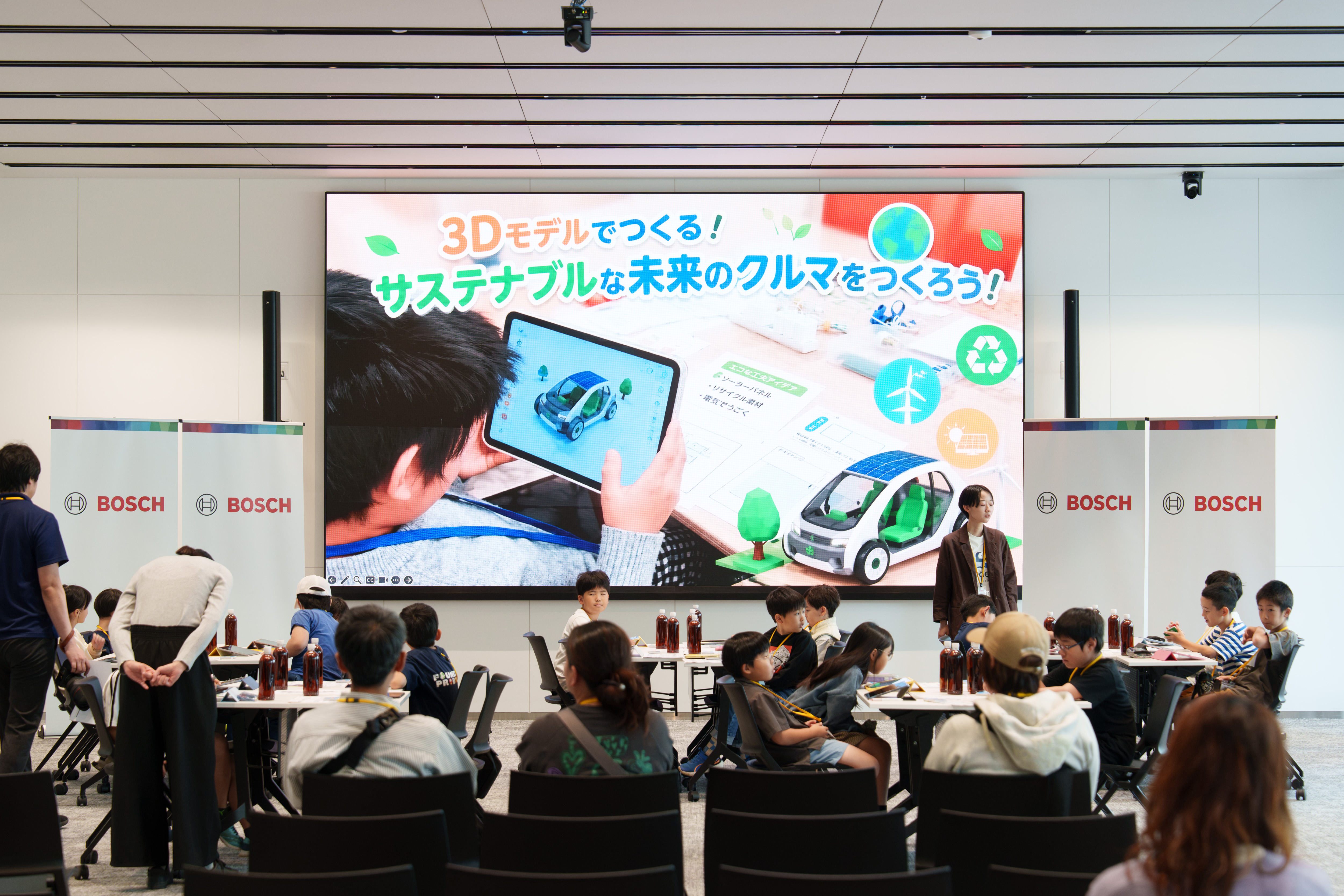
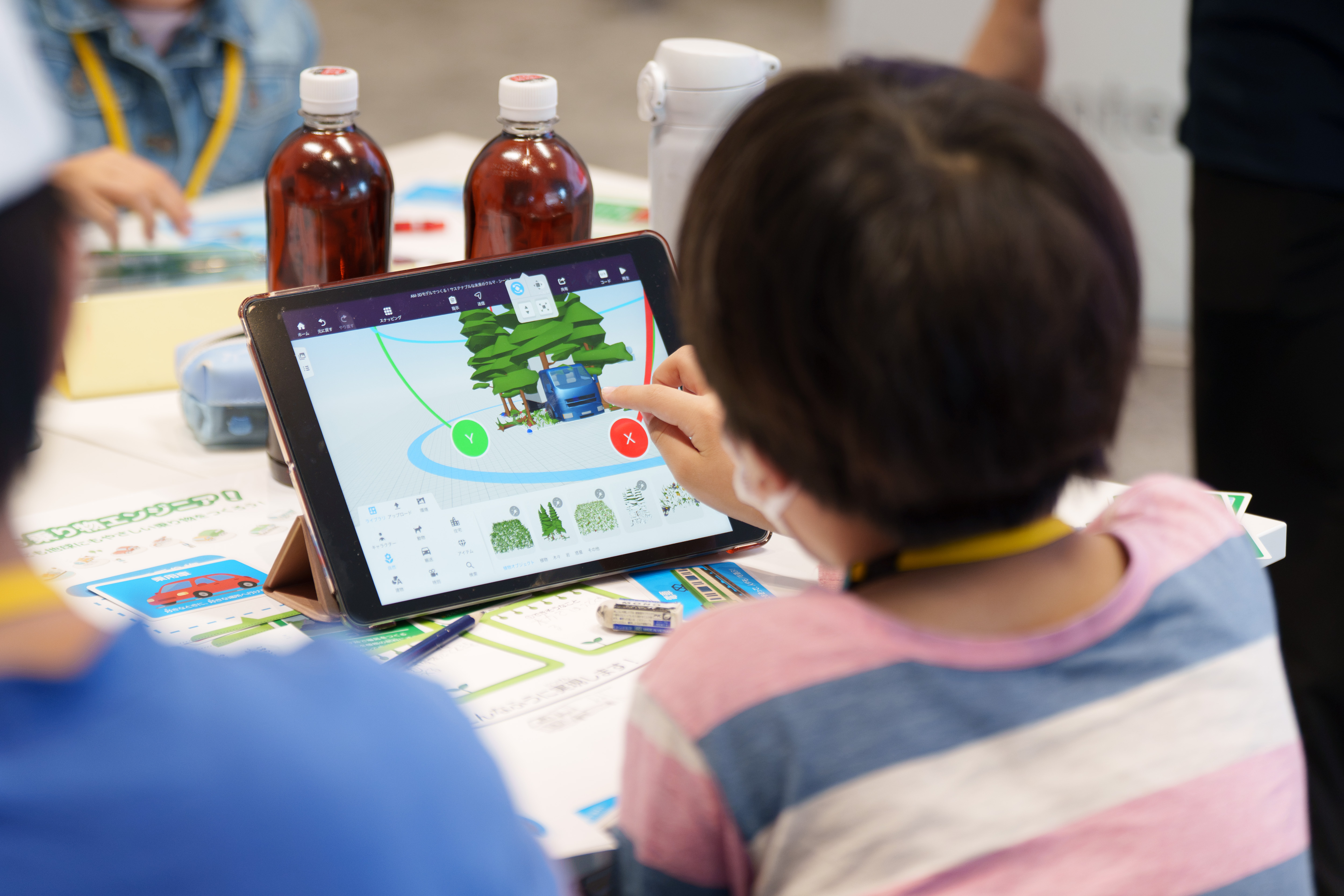
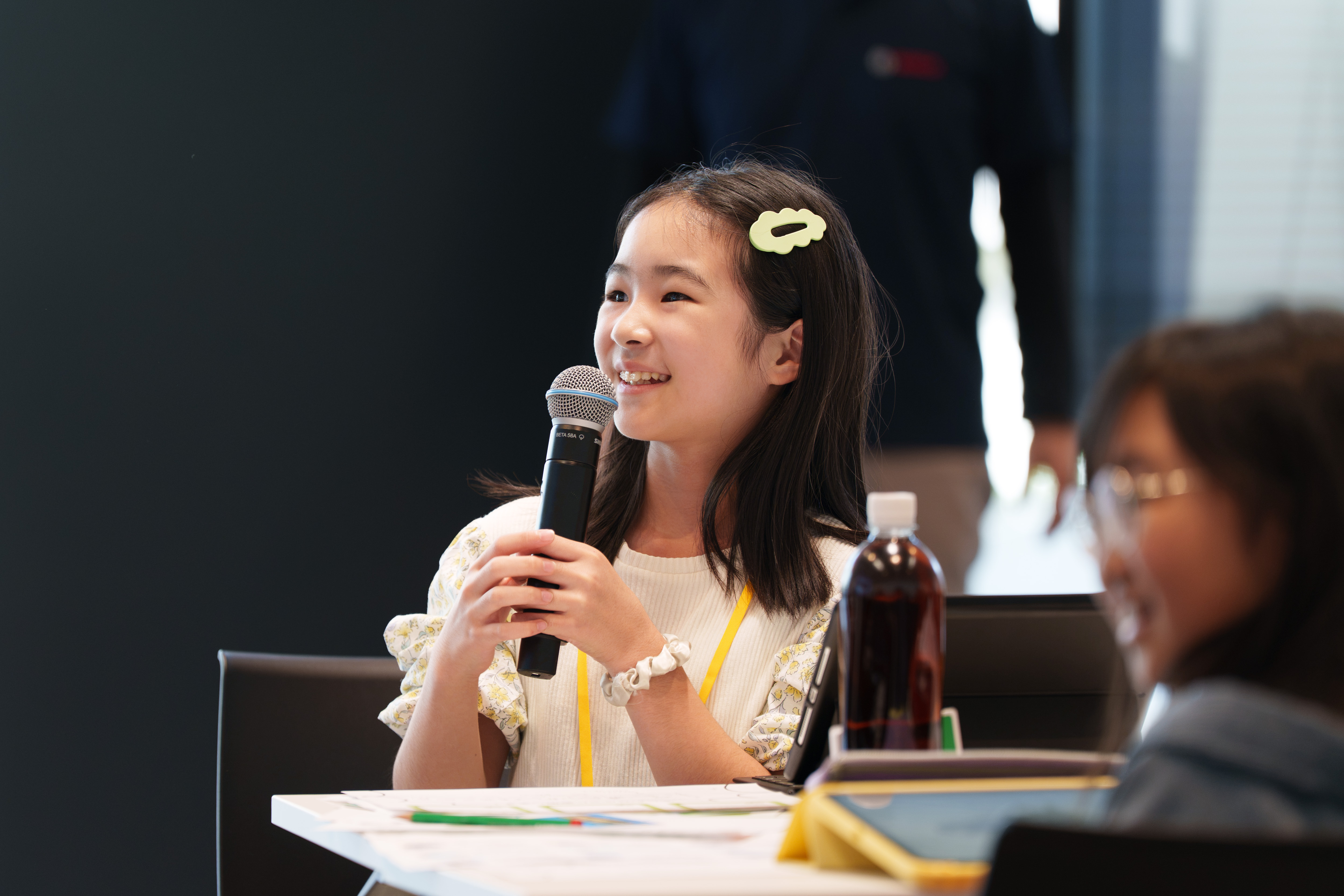
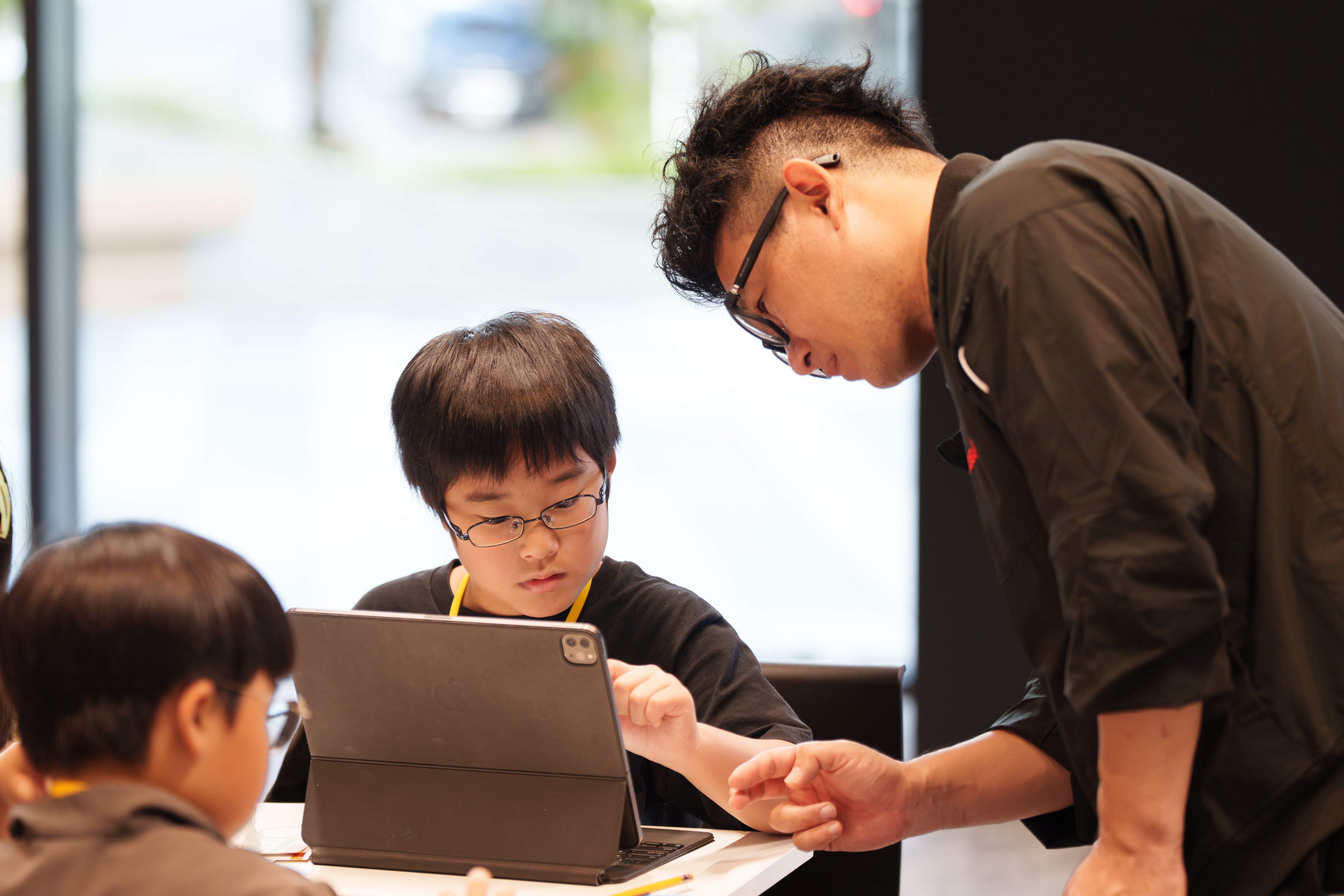
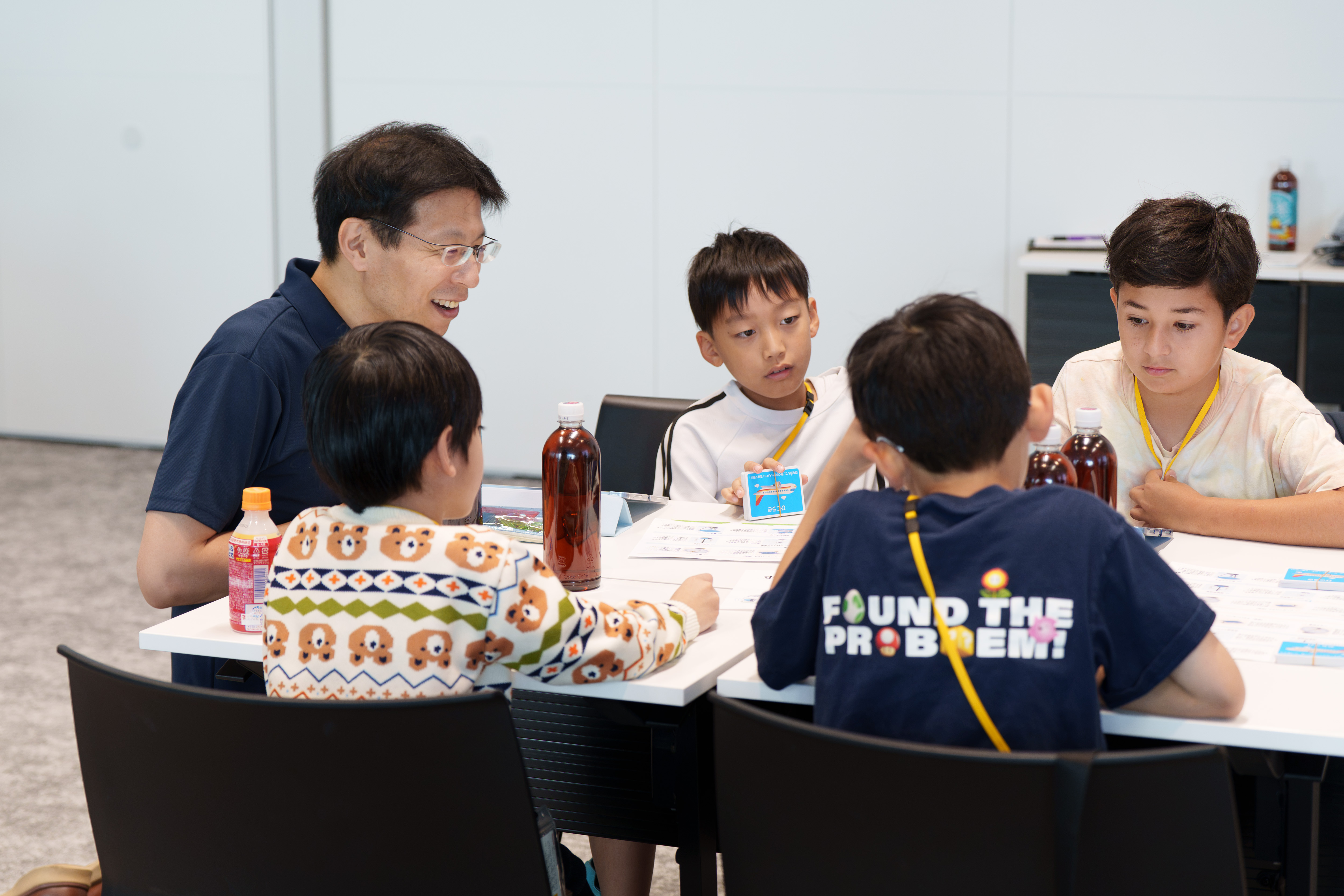
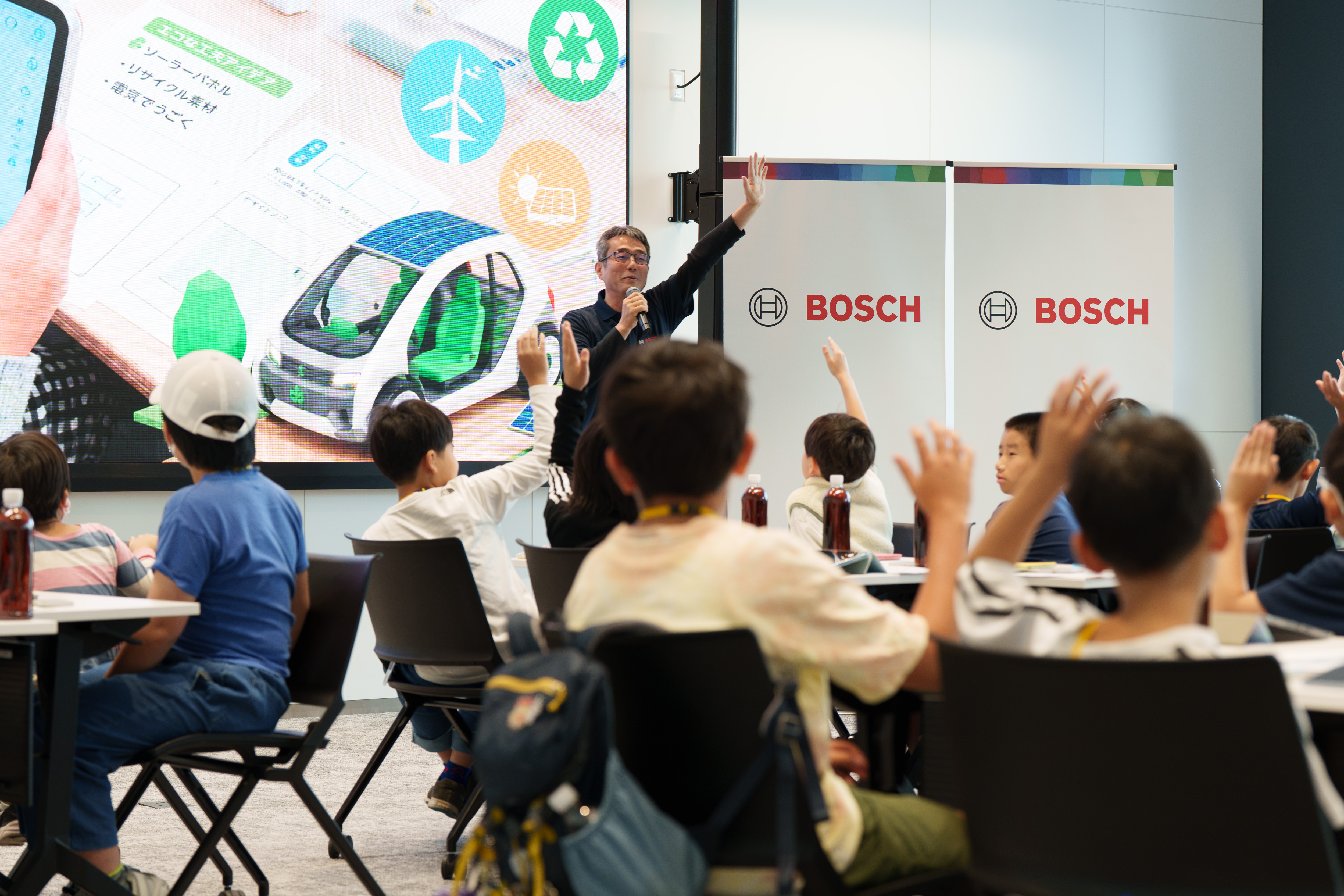
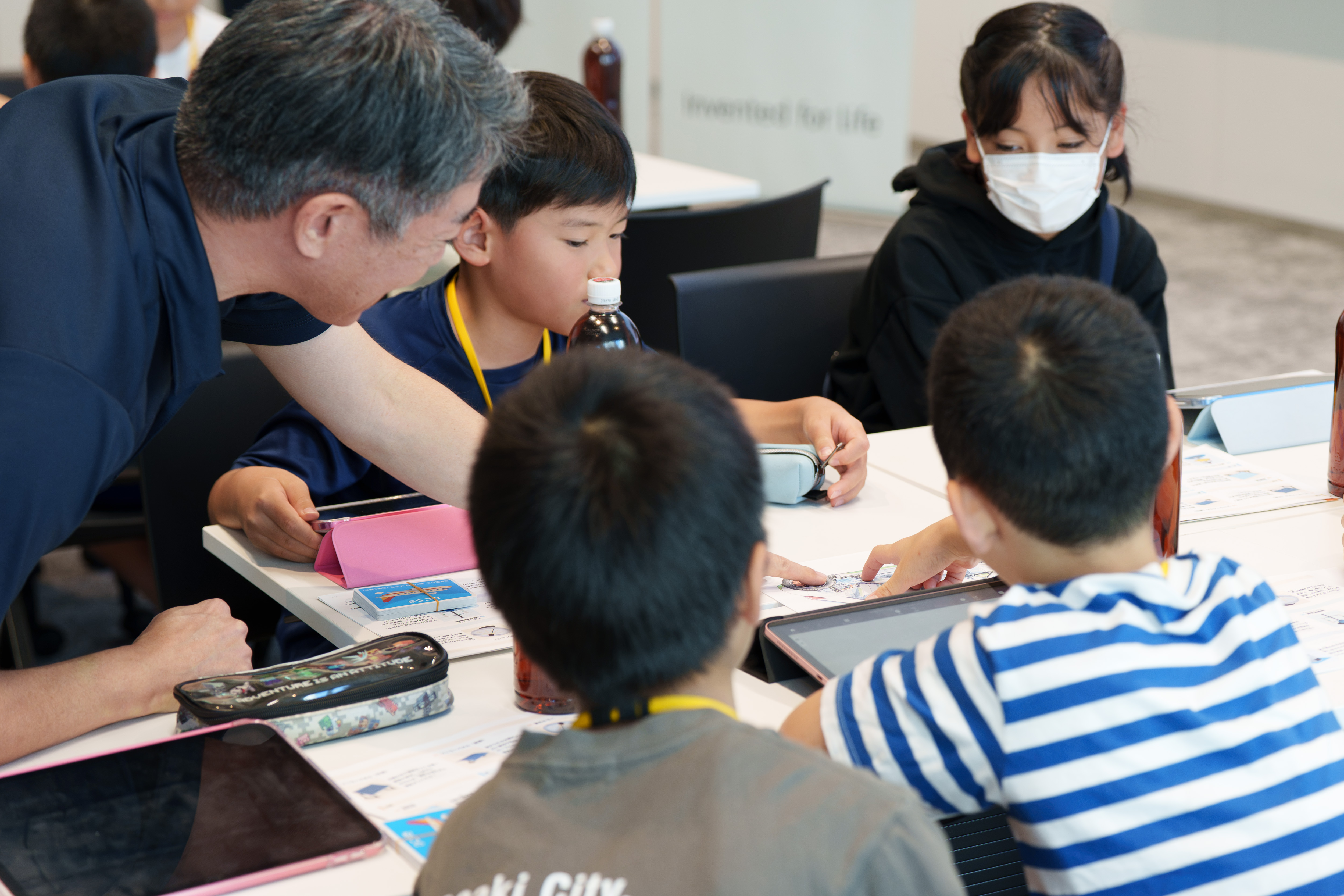
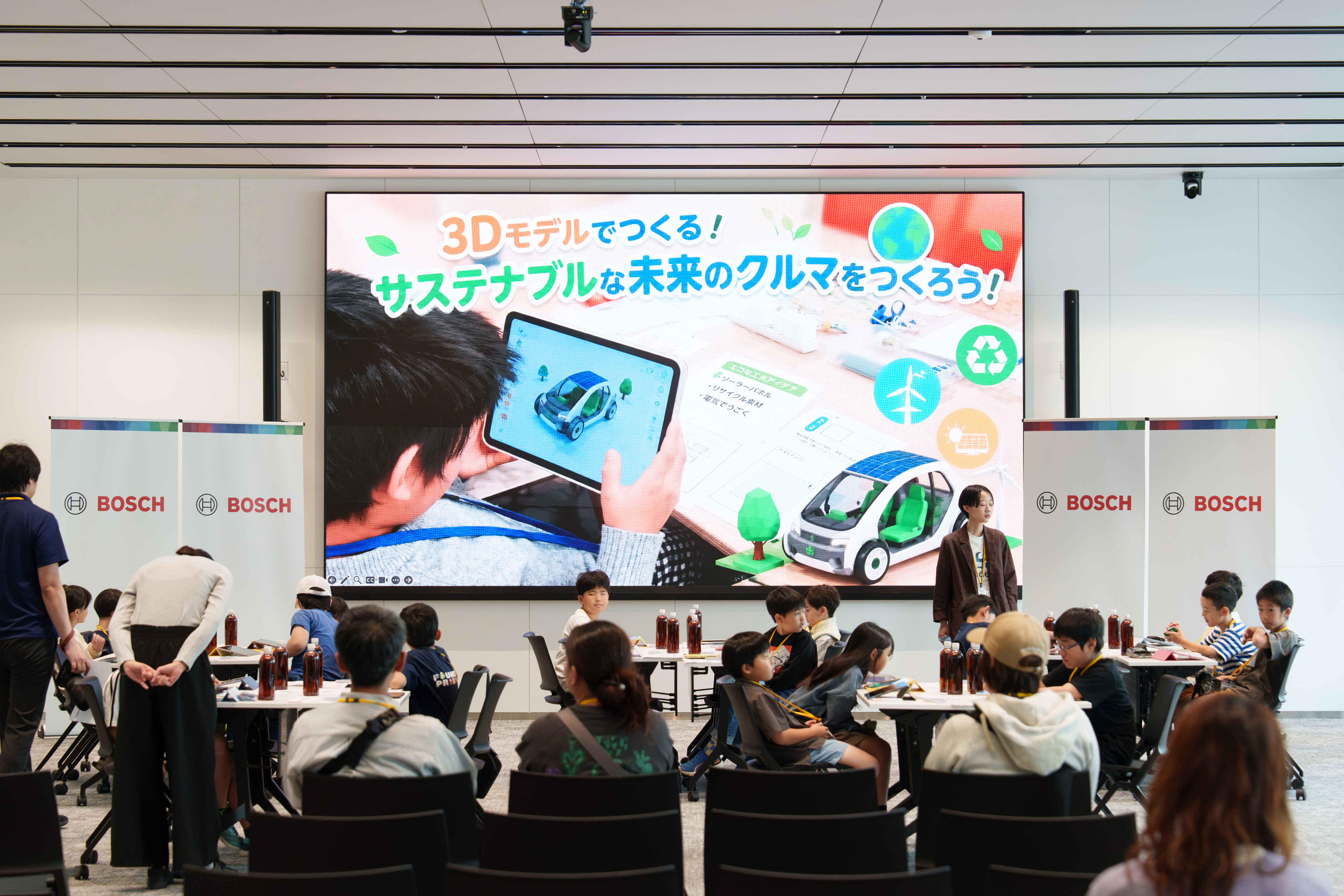
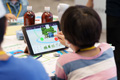
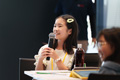
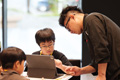
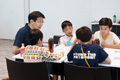
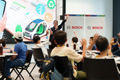
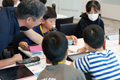
The workshop offered students a fun, game-like experience through the following four steps, allowing students to enjoy programming and 3D modeling even if they had no prior experience. With support from Bosch associates, including engineers, the participating children each designed their own original mobility solutions to resolve environmental issues and projected their 3D models in the venue using AR technology. During the final presentation, participants shared how their mobility concepts and technologies could help solve real-world environmental challenges.
Hands-on STEAM workshop steps
- Ideate with concept cards (Think)
Students select cards featuring concepts based on the themes of "Environmental issues" x "Vehicles" x "Sustainable power". They combine them like a card game to decide a concept for the mobility that they will develop. - Build with 3D Models (Create)
Based on the cards they select, students use tablets to design their own mobility concepts by assembling components such as solar panels and pumps in a 3D environment. - Bring the Designs to Life with AR (Experience)
Students use AR technology to project their 3D models in the venue, enabling children to experience the excitement of seeing their own mobility innovations come to life. - Presentations and Feedback (Communicate)
At the end of the workshop, each student gives a presentation explaining what kind of vehicle they have chosen, which components they have attached, and what environmental issues their design aims to solve.
Throughout the workshop, the children communicated with Bosch associates working in the mobility industry, discussing what kind of technologies would be needed, and which components they could use. The workshop provided an opportunity for students to approach problem-solving with an engineering mindset and experience the process of developing future mobility solutions.
The children came up with a variety of creative ideas from their own unique perspectives, including "a truck that runs on energy generated by burning collected waste" (third-grade boy), "a motorcycle that captures the energy from a lightning rod and runs on the electricity generated" (fourth-grade boy), and "a submarine that uses sensors to distinguish between fish and waste, collects waste from the ocean, and then uses it as fuel" (fifth-grade girl). While some participants commented that "it was challenging to connect environmental issues with mobility," others said that "it was fun to design my own mobility concept." The workshop provided an opportunity for children to explore their own solutions through trial and error and experience the excitement of bringing their ideas to life.
Bosch is committed not only to developing mobility systems but also to advancing safe and sustainable mobility by addressing the broader ecosystem surrounding the movement of people and goods, including services and infrastructure. Through initiatives such as this STEAM education program, Bosch provides opportunities for children to develop an interest in mobility development and advanced technologies while inspiring them to become future innovators capable of solving social challenges.
Please refer to the information below for details of the event.
| Event Title | Create a Sustainable Future Vehicle with 3D Modeling! |
| Date / Time | November 3, 2026 Morning session: 10:30〜12:00 Afternoon session: 13:30〜15:00 |
| Venue | Bosch Corporation Headquarters |
| Participants | Elementary school students in grades 3 to 6 residing in or attending schools in Yokohama Total of 42 participants across the morning and afternoon sessions |
| Organizer | Bosch Corporation |
| Supported by | Tsuzuki Ward, Yokohama City |
| Planning and operation | Pendemy Inc. |
Contact person for press inquiries:
Johdoji
Tel:045-605-3010